


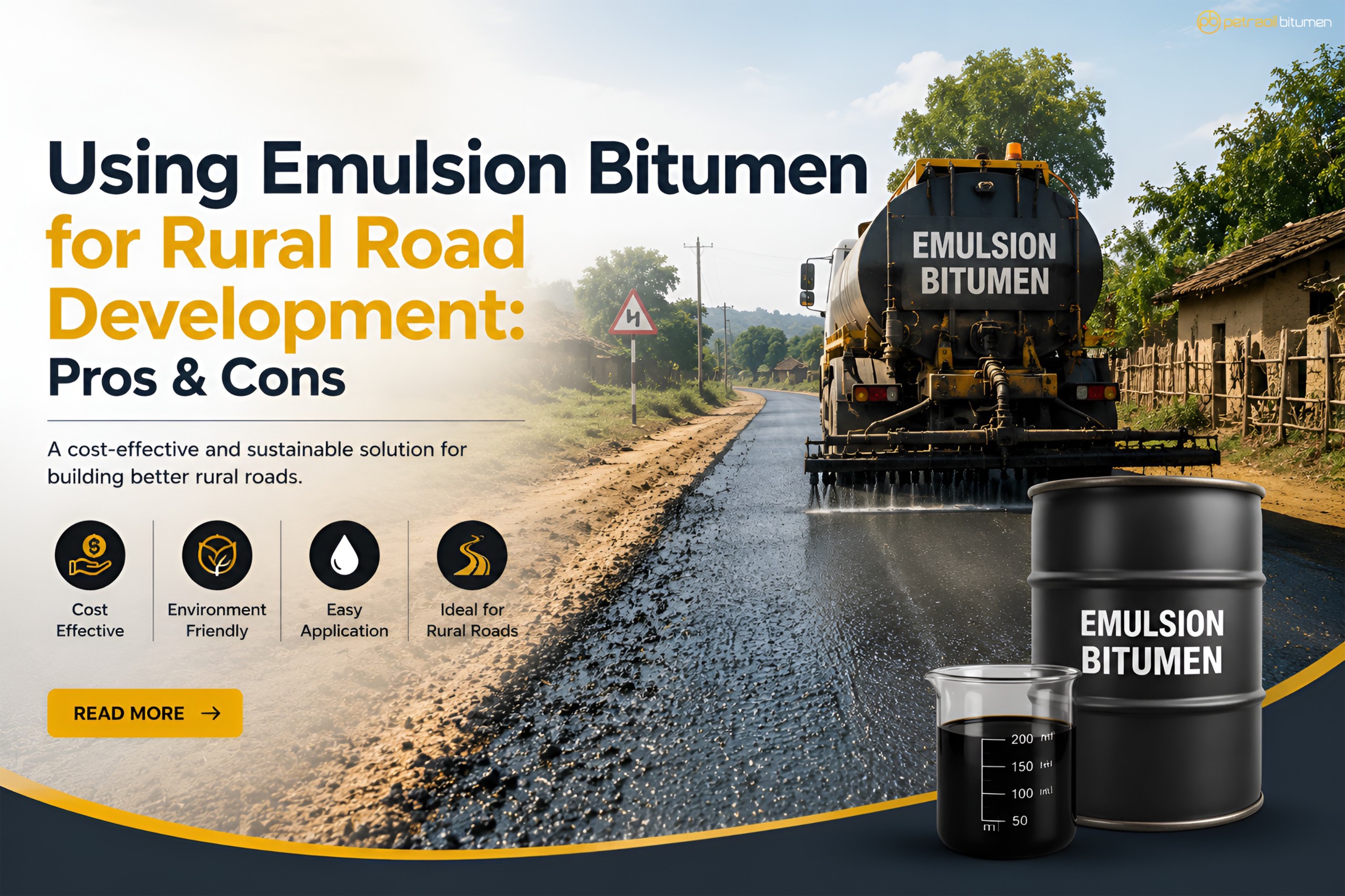
Rural roads play a vital role in connecting villages and towns to markets, schools, healthcare facilities, and economic opportunities. However, constructing and maintaining these roads often presents unique challenges, including limited budgets, difficult terrain, and varying weather conditions. Choosing the right paving material can make a significant difference in the performance, cost, and lifespan of these roads.
One solution that has gained widespread acceptance is emulsion bitumen. Unlike conventional hot bitumen, bitumen emulsions are easier to handle, require lower application temperatures, and offer improved environmental benefits. They are particularly well suited for rural road construction, where access to sophisticated paving equipment and high temperature processing may be limited.
What Is Emulsion Bitumen?
Emulsion bitumen is a mixture of bitumen dispersed in water with the aid of emulsifying agents that allows bitumen to be applied at much lower temperatures than conventional asphalt binders. Once applied, the water evaporates, leaving behind a strong bitumen film that binds aggregates together.
Because of its easy application and energy efficient production, emulsion bitumen has become a preferred choice for road maintenance, surface dressing, prime coats, tack coats, and low volume road construction.
Why Emulsion Bitumen Is Ideal for Rural Roads
Rural road projects often require practical, cost effective, and reliable construction methods given accessibility and terrain conditions. Emulsion bitumen addresses many of these requirements by simplifying transportation, reducing energy consumption, and enabling faster construction. Its ability to perform well on low volume roads while minimizing construction costs makes it an attractive solution for government agencies, contractors, and infrastructure developers working in remote areas.
Pros of Using Emulsion Bitumen for Rural Road Development
· Lower Construction Costs
One of the advantages of emulsion bitumen is its lower application temperature, heating requirements are significantly reduced enabling contractors to save on fuel, equipment, and labour cost.
· Environmentally Friendly
Lower heating requirements also mean lower greenhouse gas emissions. Reduced fuel consumption contributes to a cleaner construction process while minimizing environmental impact, making it a sustainable and ideal option.
· Easier Transportation and Handling
Traditional hot bitumen requires specialized heated tanks throughout transportation and application. Emulsion bitumen is easier to transport and store, particularly for projects located far from asphalt plants and rural regions where construction logistics can be challenging.
· Excellent Surface Bonding
Bitumen Emulsion CSS1 is widely used as a tack coat because of its slow setting properties and excellent adhesion between pavement layers. This helps improve pavement durability while reducing the risk of delamination over time.
· Faster Road Maintenance
Many rural roads require regular maintenance due to weather conditions and heavy agricultural traffic. Emulsion bitumen allows quick repairs like surface treatments, crack sealing, and patch repairs without lengthy road closures and can often be completed efficiently with minimal disruption.
· Versatile Applications
Different grades of emulsion bitumen are designed for specific construction needs.
For example:
- Bitumen Emulsion K1-40 is commonly used for surface dressing and maintenance works, providing strong aggregate adhesion and improved surface protection.
- Bitumen Emulsion RS1 is a rapid-setting emulsion ideal for chip sealing, spray applications, and situations where fast curing is required.
Using the correct grade ensures better performance and longer-lasting roads.
Cons of Using Emulsion Bitumen
While emulsion bitumen offers numerous benefits, it also has certain limitations that should be considered during project planning.
·Weather Sensitivity
Proper weather planning is essential; rain, excessive moisture, or cold temperatures can delay the breaking and curing process of bitumen emulsions.
·Limited Heavy Traffic Applications
Although emulsion bitumen performs exceptionally well on rural and low-volume roads, heavily trafficked highways may require conventional hot mix asphalt or modified bitumen systems for greater structural capacity. Engineers should select materials based on expected traffic loads.
· Storage Considerations
Extended storage without proper circulation may lead to separation or reduced performance as bitumen emulsions have a finite storage life.
·Proper Application Is Essential
Achieving optimal results depends on selecting the right emulsion grade and applying it at the correct spray rate, else it may lead to weak bonding, aggregate loss, or reduced pavement life.
Choosing the Right Emulsion Grade
Selecting the appropriate emulsion depends on the specific stage of road construction.
– Bitumen Emulsion CSS1 (slow setting) is best suited for tack coats and applications requiring slower curing with excellent bonding.
– Bitumen Emulsion K1-40 (cationic) is commonly selected for surface dressing and maintenance treatments where aggregate retention is important.
– Bitumen Emulsion RS1 is preferred when rapid setting and quick traffic reopening are priorities.
The Future of Rural Road Construction
As governments continue investing in rural infrastructure, demand for sustainable and cost effective paving materials is expected to grow.
Emulsion bitumen aligns well with modern construction goals by reducing energy consumption, lowering emissions, and improving construction efficiency. Advances in emulsion technology are also enhancing durability, making these products increasingly suitable for a wider range of road applications.
For contractors and procurement managers seeking reliable road construction solutions, emulsion bitumen represents an effective balance between performance, affordability, and sustainability.
Conclusion
Emulsion bitumen has become an essential material for rural road development due to its ease of use, lower construction costs, environmental benefits, and versatile applications. Products such as Bitumen Emulsion CSS1, Bitumen Emulsion K1-40, and Bitumen Emulsion RS1 provide specialized solutions for tack coats, surface dressing, and rapid road maintenance.
While factors such as weather conditions and proper application techniques must be carefully managed, the advantages generally outweigh the limitations for rural infrastructure projects. By selecting the appropriate emulsion grade; contractors can build durable, cost effective roads that improve connectivity and support long term community development.
Whether you’re developing new rural roads or maintaining existing infrastructure, choosing the right emulsion grade is key to long lasting performance. Contact our team at Petraoil Bitumen today to explore our full range of emulsion bitumen products and receive expert guidance tailored to your project requirements.
