


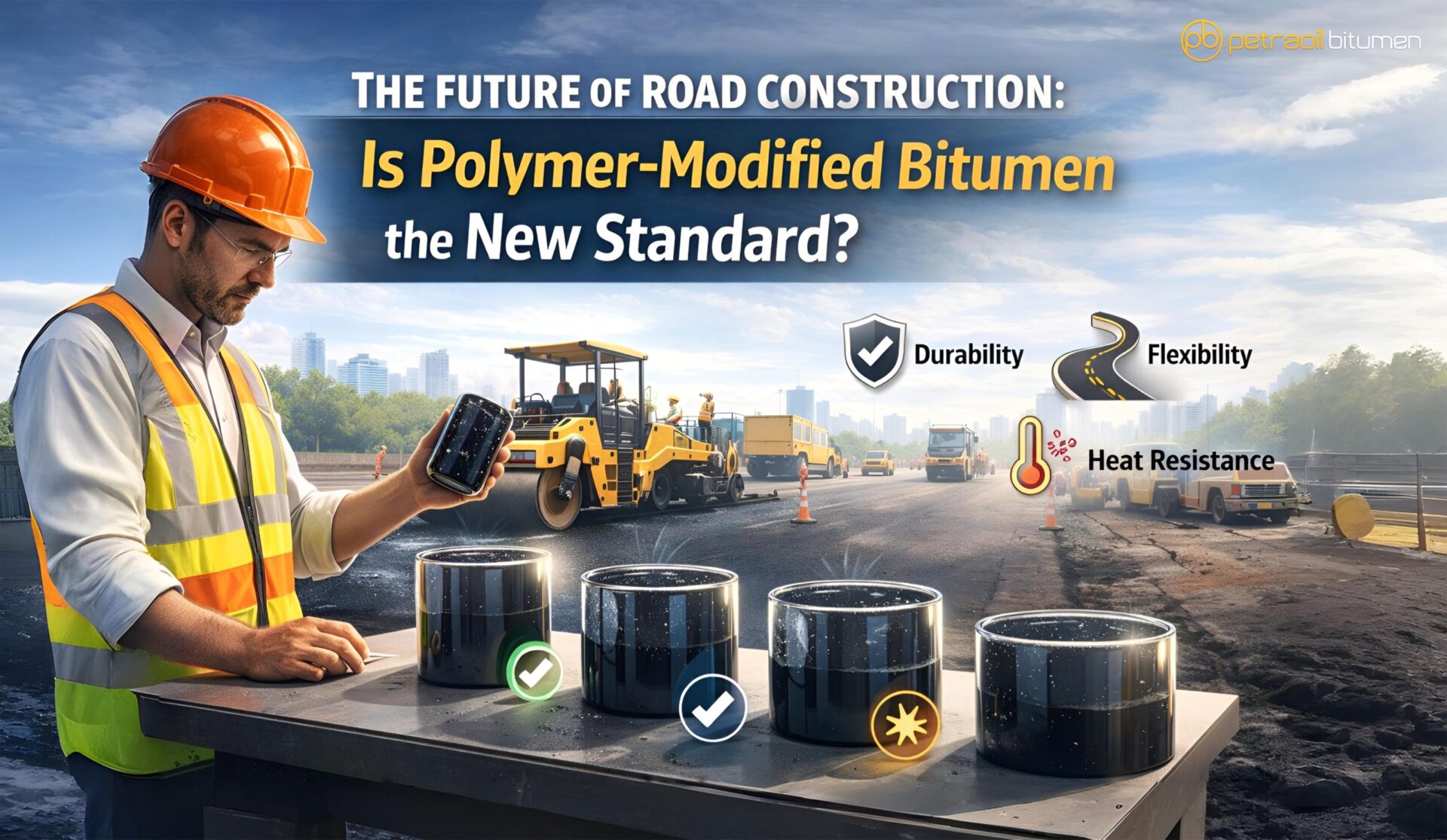
Road infrastructure is under more pressure than ever. Growing traffic volumes, heavier axle loads, rapid urbanization, and extreme climate variations are challenging the limits of conventional paving materials. As governments and private developers seek longer-lasting and cost-effective solutions, one material is gaining significant attention: Polymer-Modified Bitumen (PMB).
But is PMB truly the new standard for modern road construction? Let’s explore its role, benefits, and the different types of polymer-modified grades shaping the future of highways and urban roads.
What Is Polymer Modified Bitumen?
Bitumen is the binding agent used in asphalt pavements. While traditional bitumen has served the industry for decades, it can struggle with:
- Rutting in high temperatures
- Cracking in cold weather
- Fatigue under repeated traffic loads
- Oxidation and aging over time
Polymer-Modified Bitumen improves conventional bitumen by incorporating polymers that enhance elasticity, strength, and temperature resistance. The result is a more durable and flexible binder that performs better under stress.
Why PMB Is Transforming Road Construction
1. Superior Temperature Performance
PMB maintains flexibility at low temperatures and resists deformation at high temperatures. This makes it ideal for regions experiencing extreme weather fluctuations.
2. Increased Resistance to Rutting and Cracking
Heavier trucks and higher traffic density demand stronger pavements. PMB enhances load-bearing capacity, reducing permanent deformation and surface cracks.
3. Longer Service Life
Roads constructed with PMB generally last longer than those using conventional bitumen, lowering maintenance frequency and overall life-cycle costs.
4. Improved Safety
PMB enhances skid resistance and surface durability, contributing to safer driving conditions.
Types of Polymer Modified Bitumen
Polymer-modified bitumen can be categorized based on the type of polymer used and performance grading systems. Below are the major types and grades commonly used worldwide:
1. Elastomer-Modified Bitumen
Elastomers provide elasticity and recovery properties.
Common Types:
- SBS (Styrene-Butadiene-Styrene) – The most widely used elastomer; improves flexibility and fatigue resistance.
- SBR (Styrene-Butadiene Rubber) – Enhances crack resistance and durability.
Applications:
- Highways
- Bridges
- Airport runways
- High-traffic urban roads
These are ideal where flexibility and resistance to repeated loading are critical.
2. Plastomer-Modified Bitumen
Plastomers increase stiffness and strength.
Common Types:
- EVA (Ethylene Vinyl Acetate) – Improves high-temperature stability.
- PE (Polyethylene) – Increases rigidity and deformation resistance.
Applications:
- Roads in hot climates
- Industrial areas with heavy loads
These are particularly effective in regions where rutting due to heat is a major concern.
3. Crumb Rubber Modified Bitumen (CRMB)
This type uses recycled tire rubber as a modifier.
Advantages:
- Enhanced elasticity
- Improved fatigue resistance
- Sustainable and environmentally friendly
Applications:
- Highways
- Noise-reducing pavements
- Sustainable infrastructure projects
CRMB is increasingly popular due to its environmental benefits and cost-effectiveness.
Polymer-Modified Bitumen Grades
Different countries follow specific grading systems to define PMB performance. The most common grading approaches include:
A. Performance Grade (PG) System
Widely used in countries like the United States.
Examples:
- PG 64-22
- PG 70-22
- PG 76-10
The numbers represent:
- The maximum pavement temperature (first number)
- The minimum pavement temperature (second number)
Higher grades (e.g., PG 76-10) are typically polymer-modified to handle extreme heat and heavy loads.
B. PMB Grades (Common in Asia & Europe)
Some countries specify PMB grades such as:
- PMB 40
- PMB 70
- PMB 120
The number generally indicates penetration or viscosity levels, with higher numbers offering greater elasticity and performance.
C. Crumb Rubber Modified Grades
Examples:
- CRMB 50
- CRMB 55
- CRMB 60
These grades indicate viscosity and performance standards tailored for different traffic and climatic conditions.
Challenges of PMB Adoption
While PMB offers numerous advantages, it comes with certain challenges:
- Higher initial material cost (typically 10–30% more than conventional bitumen)
- Requires specialized production and storage
- Needs strict quality control during mixing and laying
However, the reduced maintenance and longer lifespan often justify the initial investment.
Is PMB the New Standard?
In many advanced economies and high-traffic corridors, polymer-modified bitumen is already becoming the preferred choice. As sustainability, durability, and life-cycle cost analysis take center stage in infrastructure planning, PMB’s benefits align perfectly with modern engineering demands.
With advancements in polymer technology, recycling innovations, and improved manufacturing processes, PMB is not just an alternative — it is increasingly becoming the benchmark for high-performance roads.
Conclusion
The future of road construction lies in smarter materials that balance durability, cost-efficiency, and environmental responsibility. Polymer-Modified Bitumen delivers on all three fronts. By offering superior performance in extreme conditions and extending pavement life, PMB is poised to redefine industry standards.
As infrastructure investment continues worldwide, the shift toward polymer-modified grades appears not only logical but inevitable.

vardenafil 20mg price
vardenafil 20mg price
lisinopril 5 mg
lisinopril 5 mg
lipitor 10mg
lipitor 10mg
metoprolol used for
metoprolol used for
hello world
hello world
azitrocin
azitrocin
finasteride tablet
finasteride tablet
levitra medication
levitra medication
doxycycline for acne
doxycycline for acne
linezolid cost us
linezolid cost us
prevacid generic over the counter
prevacid generic over the counter
zoloft rx
zoloft rx
Comments are closed.